Aussie96 App Download and Mobile Casino Features
 Available in AU
Aussie96 has Australia-facing activity, but no native Aussie96 app is confirmed in Apple’s App Store or Google Play. The safest distinction is therefore simple: mobile access and native-app availability are different questions. A casino site can be used in a phone browser without having a separate iOS or Android application. The Australia-oriented website is identifiable, but no native store app, official download link or APK link is established here. For the broader brand overview, see the Aussie96 review.
For readers evaluating mobile use, that distinction matters more than generic claims that a site is “mobile friendly”. The practical test is whether the service can be reached through a current browser, whether important account functions remain usable on a small screen, and whether any installation request can be tied to the official operator. Because Aussie96’s primary site is aussie96.com, readers should treat lookalike domains, unsolicited download files, and third-party APK pages as separate sources that need their own identity checks.
Once you have set up the platform on your device, the next step is completing the registration and KYC verification process to secure your profile.
Aussie96 Mobile Casino App Performance and APK Installation
Two points are clear. First, Aussie96’s primary domain is aussie96.com. Second, the brand is presented for Australian players and has reported Australian user activity. Those details establish the website identity and audience context. They do not establish a native application, an app-store app publisher identity, an official APK package, or a particular mobile operating-system requirement.
That distinction matters when assessing mobile access. The absence of a confirmed native listing is not evidence that every phone is blocked, and it does not prove that an application has never existed. It simply means an iOS or Android listing should not be labelled official without a clear app-store or operator connection.
Browser access versus a native app
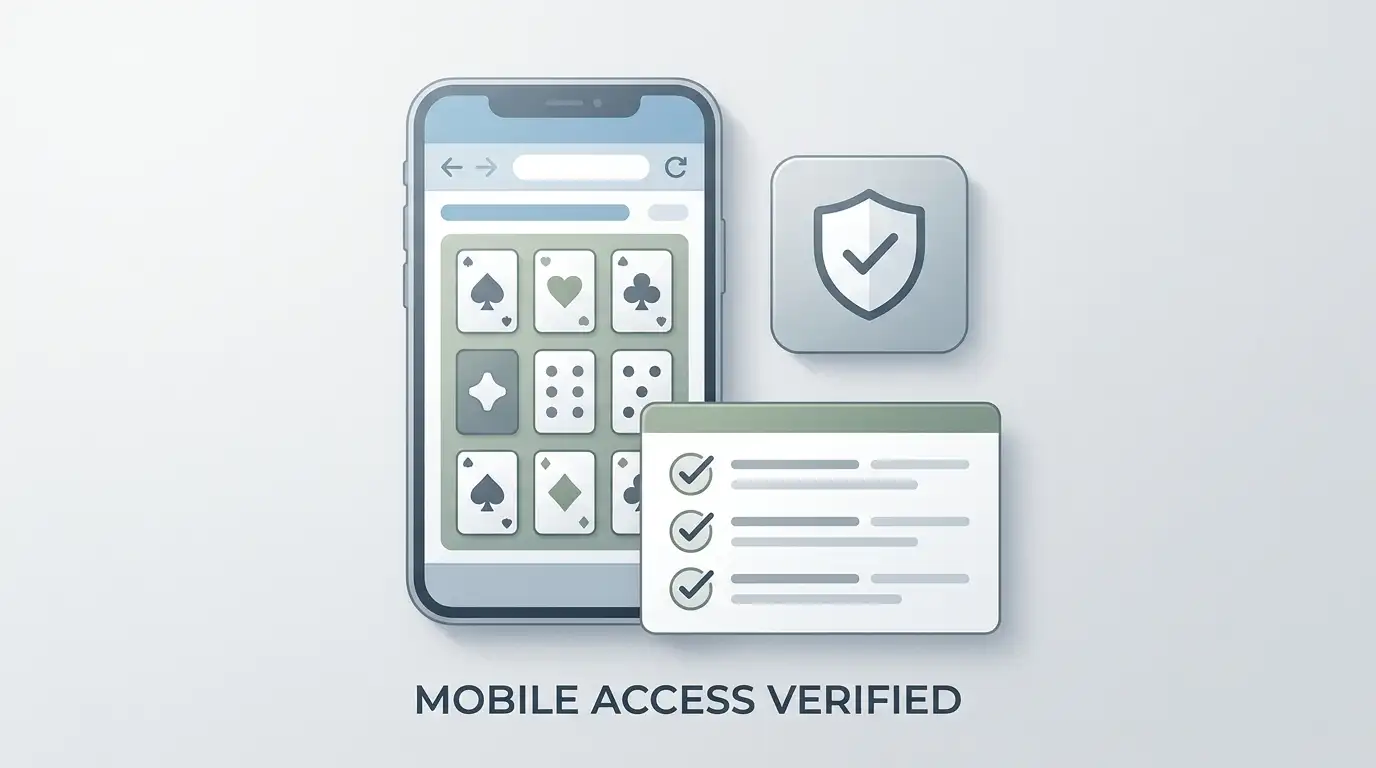
A browser-based casino experience runs inside Safari, Chrome, Firefox or another web browser. A native app is separately installed software distributed through an app store or another installation channel. The two can look similar on a phone, but their ways to check are different. A browser session can be checked against the domain in the address bar. A native app should be checked against its store listing, app publisher identity, package information, privacy disclosures and the operator’s own official references.
That makes browser identity easier to audit in one respect. Before entering account credentials, the reader can inspect the hostname and confirm that it matches the expected official domain. With an app, a familiar icon or the word “Aussie96” is not enough. Store listings can be imitated, and Android installation files distributed outside an official store can use arbitrary names and artwork.
How to assess the mobile site in practice
Measured load times, frame rates, battery use and device-by-device compatibility are not confirmed. A reader can instead evaluate the mobile experience with a short functional audit. Start with navigation: key account areas should remain reachable without horizontal scrolling or obscured controls. Then check whether game pages, account settings and help areas remain legible at normal zoom. Finally, confirm that the browser continues to show the expected domain when moving between important account areas.
Readers interested in the actual gambling catalogue should use the separate Aussie96 pokies and games guide. Keeping that topic separate avoids treating a game list as proof of mobile software quality. A large catalogue says nothing by itself about touch controls, browser stability or whether a native application exists.
When comparing browser access with an app claim, use the same identity checks each time. Confirm the expected domain for browser use, and for installed software confirm the publisher and distribution channel before entering account credentials. A familiar brand name or icon is not enough to connect software to the operator. Keeping those checks separate also makes it easier to avoid unofficial download pages and distinguish a saved website shortcut from installed native software.
A practical mobile safety checklist
- Check the hostname before entering a password or personal information.
- Do not infer that a home-screen shortcut is a native application; browsers can save websites to the home screen.
- Check the app publisher identity before trusting an app-store listing.
- Do not install an APK merely because its filename contains the casino brand.
- Keep operating-system and browser security updates current.
- Use the account and withdrawal pages to understand verification requirements before relying on mobile access for a transaction.
These checks focus on identity and control rather than visual polish. They are useful because the most consequential mobile mistake is not a slightly awkward layout; it is giving credentials or documents to software or a domain that cannot be tied to the intended service.
Why an unofficial Aussie96 APK should be avoided
An APK is an Android application package. Publishing or recommending one requires more than finding a download button on a third-party page. The file needs a trustworthy provenance chain, and ideally the operator should link to it from a official property. No official Aussie96 APK link is established, so an APK from an unauthenticated third-party source should not be treated as official.
The same logic applies to iOS. A search result, promotional post, or saved image that resembles an App Store page is not enough to establish an official listing. A reliable confirmation would connect the listing to the operator through a current store page and an official brand reference. Without that chain, a third-party download route should not be treated as official.
What if a website asks you to install something?
Treat installation as a separate security decision. Check whether the request originates on the expected domain, whether the operator explains why installation is needed, and whether the software can be independently confirmed. Never disable normal device protections simply to install a casino application. A claim that security settings must be bypassed is a reason for additional scrutiny, not proof that the file is legitimate.
Account functions matter more than an app badge
For many readers, the meaningful mobile questions are whether they can understand account status, reach support information, review transaction history, and respond to identity checks. Those functions affect real account management. A native-app badge is secondary if the same tasks are available through the official website in a browser.
Identity verification deserves particular care on a phone because it can involve sensitive personal information. The separate Aussie96 registration and KYC guide covers those checks. Exact document requirements and verification timing should come from current official account instructions rather than assumptions carried over from another casino or an older guide.
Decision guide: browser first, app claim second
If your goal is simply to understand whether Aussie96 has a mobile route, begin with the official domain and assess the browser experience directly. If your goal is specifically to install a native application, require a higher standard: a current official store listing or a clearly authenticated operator download channel. Without that confirmation, no iOS, Android or APK download should be labelled official. The distinction also helps with security: browser access can be checked against the expected hostname, while installed software needs a separate publisher and distribution check.
That approach avoids two common errors. The first is assuming that a responsive website proves a native app exists. The second is assuming that a third-party download bearing the brand name is genuine. Both shortcuts collapse different information questions into one. Keeping them separate gives Australian readers a clearer way to assess mobile access without adding unsupported product claims.
What to record when testing mobile access
If you inspect the service yourself, keep the observations separate from assumptions. Record the device type, operating system, browser, date, the exact hostname used, and which functions you actually tested. Note whether navigation, account access, help information and transaction history were reachable. This gives you a useful record of what worked on that device without turning one test into a universal compatibility claim.
Also distinguish temporary failures from product design. A single game failing to load can be caused by a provider, network, session or device issue; it does not establish that the entire mobile service is incompatible. Conversely, one successful session does not prove every game or account function works on every phone. State which device and browser you tested instead of turning one result into an absolute claim.
Mobile performance can vary by device and browser, so record the device, browser and functions you actually test.
Find out if this brand meets all your gaming needs by reading the full Aussie96 evaluation for Australian players.
FAQ
Does Aussie96 have an official iPhone app?
No official iOS App Store listing is confirmed here, so no iPhone download link is provided.
Does Aussie96 have an official Android app?
No official Google Play listing or official APK source is confirmed here. Check any Android download claim against the official website or app-store information before installation.
Is a mobile website the same as an app?
No. A mobile website runs in a browser. A native app is installed software with a separate publisher and distribution record.
Where should I check account verification?
See the registration and KYC guide for account checks, document requests and timing considerations.
Created by the ”Aussie96” editorial team.